Owners, managers and HOA boards usually need more than a cleaned wall. They need photos, a written scope, moisture readings and clearance results to hand to an insurer, tenant or board. Call the number on this page to be connected with a local mold company in Dallas.
Rentals and tenant reports
For landlords in Dallas County, a tenant complaint about mold starts a record. Most landlords want to look quickly, find the source and keep dated photos from before and after. Putting the report, the inspection and the repair in writing protects both sides and keeps small problems from turning into disputes.
Slabs, brick and finishes
Slab-on-grade floors and masonry walls can pass moisture upward and inward, and expansive clay soil shifts foundations enough to open gaps. Vinyl flooring, wall covering and carpet tile can trap that moisture between layers, so growth hides well before anything shows on the surface.
Many buildings and apartment communities in Dallas date to the 1970s, so patched roofs, aging supply lines and older air handlers are common starting points worth checking first.

Comparing bids on equal terms
- Match square footage and rooms.
- Confirm containment and air filtration.
- Check that drying and disposal are included.
- Ask who handles the rebuild.
- Verify the TDLR license number.
When two bids differ widely, the gap usually sits in one of these items, not in the quality of the work.
Local details for Dallas
TDLR issues separate mold assessment and mold remediation credentials. A two-minute lookup on TDLR's search confirms the company holds the right one for the job you're hiring it to do.
Once a regulated project passes clearance, Texas law calls for a Certificate of Mold Damage Remediation, a document worth keeping with your home and insurance records.
Dallas Building Inspection handles building permits here, so that's the place to check before walls, cabinets or flooring go back in.
If storm runoff or creek water got inside, FEMA's flood map service and your insurer can tell you how the address is zoned.
Calls from Dallas are often matched with companies that also cover Irving, Duncanville and Grand Prairie.
Removal, cleaning and drying
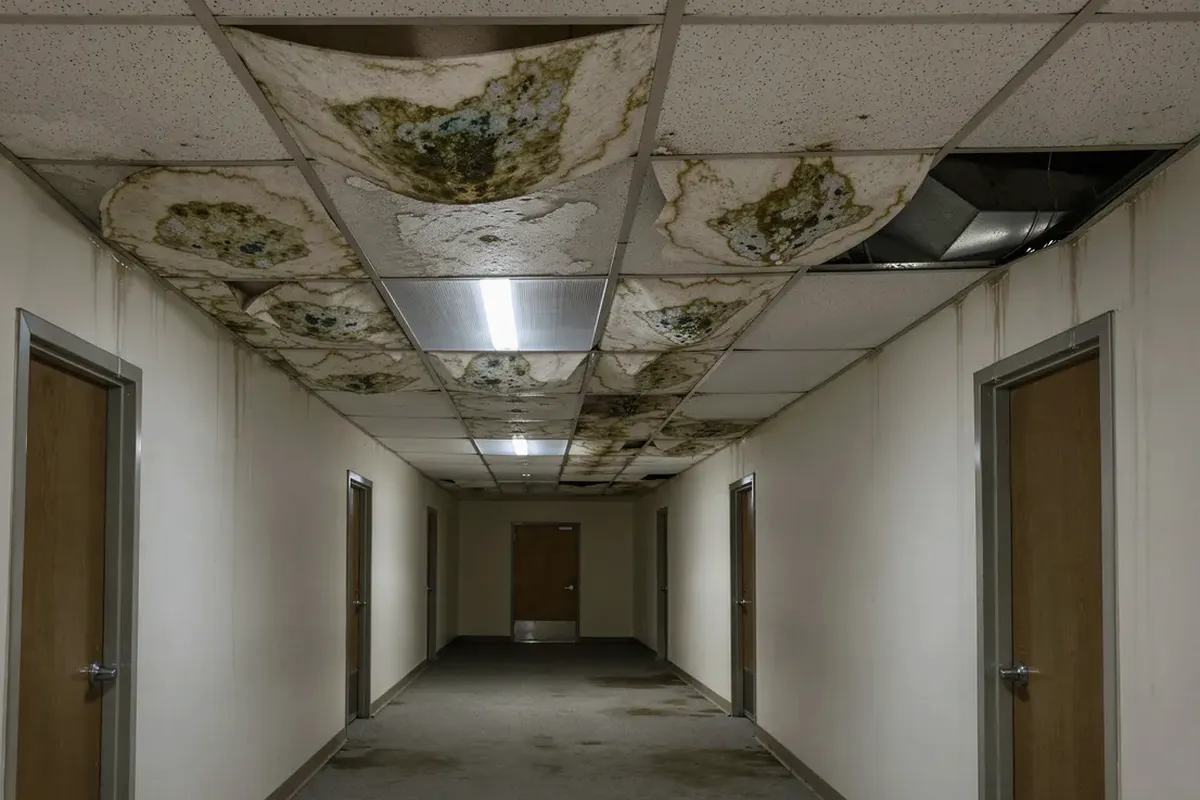
Wet ceiling tile, insulation and drywall that cannot be dried are cut out and bagged, framing and hard surfaces are cleaned, and fans and dehumidifiers bring materials back to dry. EPA advises that porous materials that stay moldy usually have to go, so the plan may be larger than the visible patch.
Humidity control for larger spaces
EPA suggests keeping indoor humidity below about 60 percent, ideally 30 to 50. In big rooms with many occupants, a controls schedule that leaves the AC off overnight can let humidity climb. A few inexpensive humidity monitors and a tune-up of the schedule often fix that.
Around Dallas
Calls come in from across Dallas, including around Oak Cliff, Lakewood, Bishop Arts District.
The Trinity River runs through Dallas and is flanked by earthen levees, and parts of the city sit in its floodplain.
Commercial Mold Remediation questions in Dallas
What records should a property manager keep?
How fast do wet materials need to dry?
Is bleach acceptable for commercial cleanup?
Why do older buildings see more hidden leaks?
More mold services in Dallas
Commercial Mold Remediation nearby
Helpful guides
Sources
Last updated: