Attic mold usually comes from a roof leak, poor ventilation or sweating ductwork, and it tends to spread across decking and insulation. Removal means fixing the moisture source first, and larger jobs call for a remediation company holding a TDLR mold license. Call the number on this page to be connected with a local mold company in Fort Worth.
Why attics grow mold in North Texas
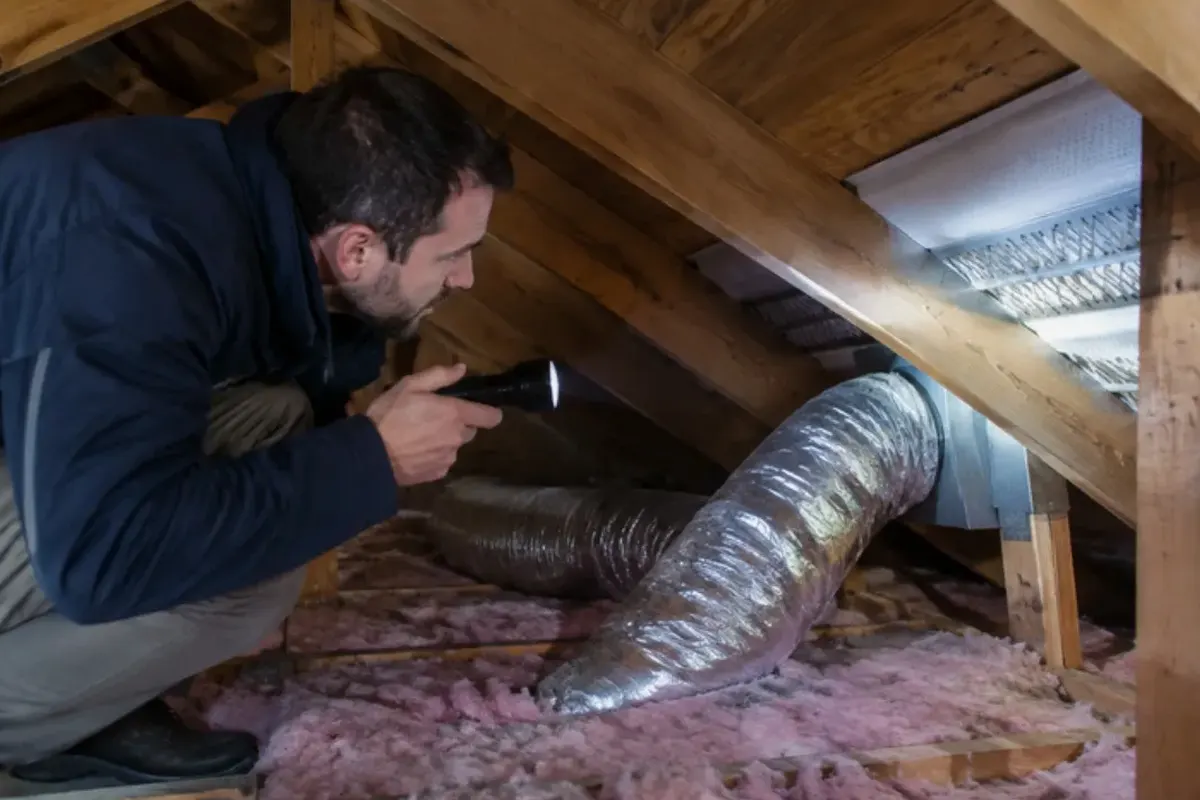
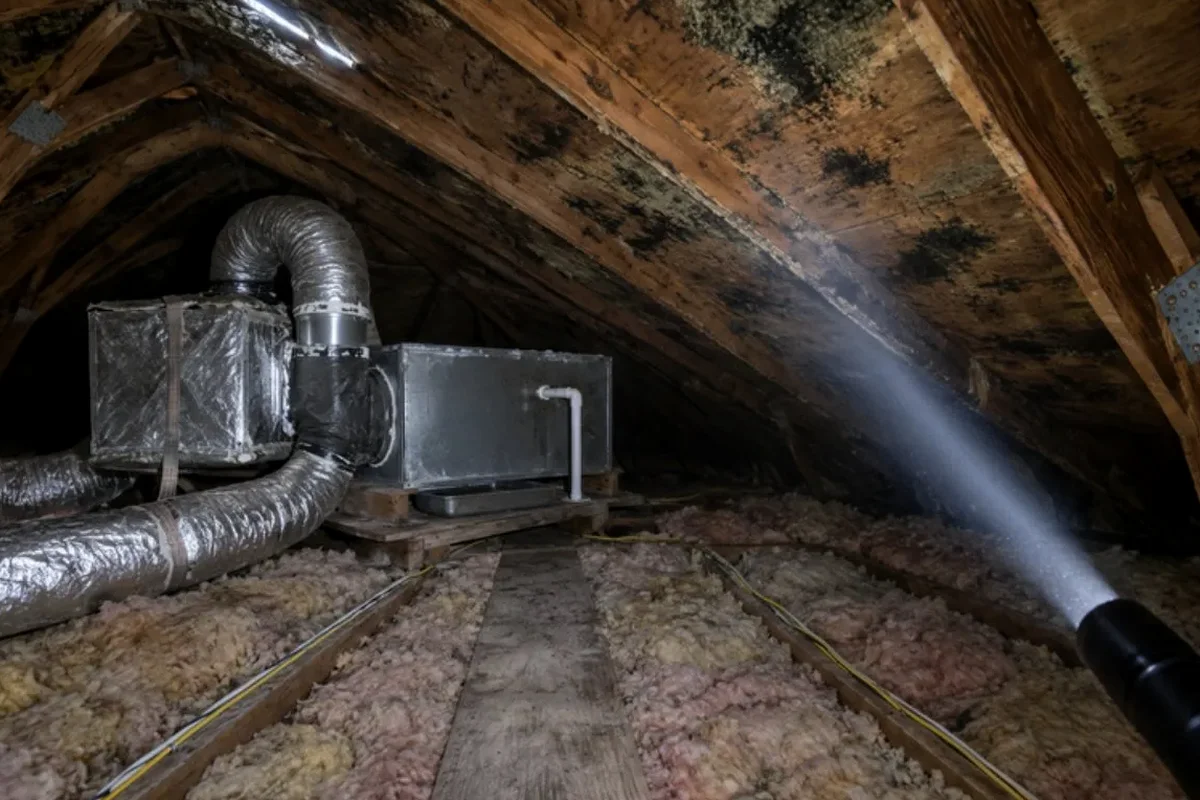
Fort Worth attics bake in summer, then take in moisture from several directions. Hail and spring storms damage roofing and flashing, bathroom or dryer vents may exhaust into the attic instead of outside, and air handlers and ducts up there can sweat or drip. Blocked soffit vents trap humid air against the underside of the roof deck. Cooler winter nights add condensation on decking.
What to look for
- Dark or fuzzy patches on rafters and roof decking
- Matted, stained or damp insulation
- A musty smell near the attic hatch or upstairs rooms
- Water stains on ceilings below
What removal involves
An independent assessor can map the affected area and write the protocol. The remediation company then contains the attic, removes contaminated insulation, and cleans the wood, often with HEPA vacuuming and wire brushing or sanding. Heavily affected sheathing may be cut out. Roof repairs, vent rerouting and any duct fixes should be done as part of the plan, because cleaning without correcting the cause invites regrowth. If ducts are involved, see AC and duct mold removal. Insulation replacement is commonly priced separately.
What it costs
One national cost guide lists a partial attic at $1,500 to $6,000 per job and a full attic at $6,000 to $15,000, higher with extensive damage or insulation replacement. These are national estimates, not Fort Worth quotes. A Fort Worth guide gives $9 to $18 per square foot for mold remediation in general, which is a useful cross-check against any written scope.
Licensing and the assessor rule
TDLR says Texas requires a mold remediation license, except for visible mold under 25 contiguous square feet. Attics are rarely that small once insulation is involved. A remediation contractor creates a work plan that follows the assessor's protocol, and both must reach you at least one calendar day before work starts. The same person generally cannot do both jobs. Look up any company on TDLR's license search, and ask who handles post-remediation testing.
Hot attics also make the work physically demanding, so crews often schedule around the afternoon heat. Ask how access, containment and debris removal will be handled so insulation and spores are not tracked through the living space. Photos of the attic before and after give you a record of what was done.
Attic Mold Removal questions from Fort Worth homeowners
Is attic mold always from a roof leak?
Can I remove attic mold myself?
Does insulation have to be replaced?
Will my attic mold come back?
Related mold services in Fort Worth
Helpful guides
Attic Mold Removal in nearby cities and towns
Tarrant County
Dallas County
Denton County
Johnson County
Parker County
Ellis County
Wise County
Hood County
Sources
Last updated: