North Texas homes get mold mostly from plumbing and roof leaks, AC condensate trouble, storm flooding and humid indoor air during long summers. A Rhome homeowner can reach local companies for inspection, testing, removal, duct and attic work and a clearance check. Call the number on this page to be connected with a local mold company in Rhome.
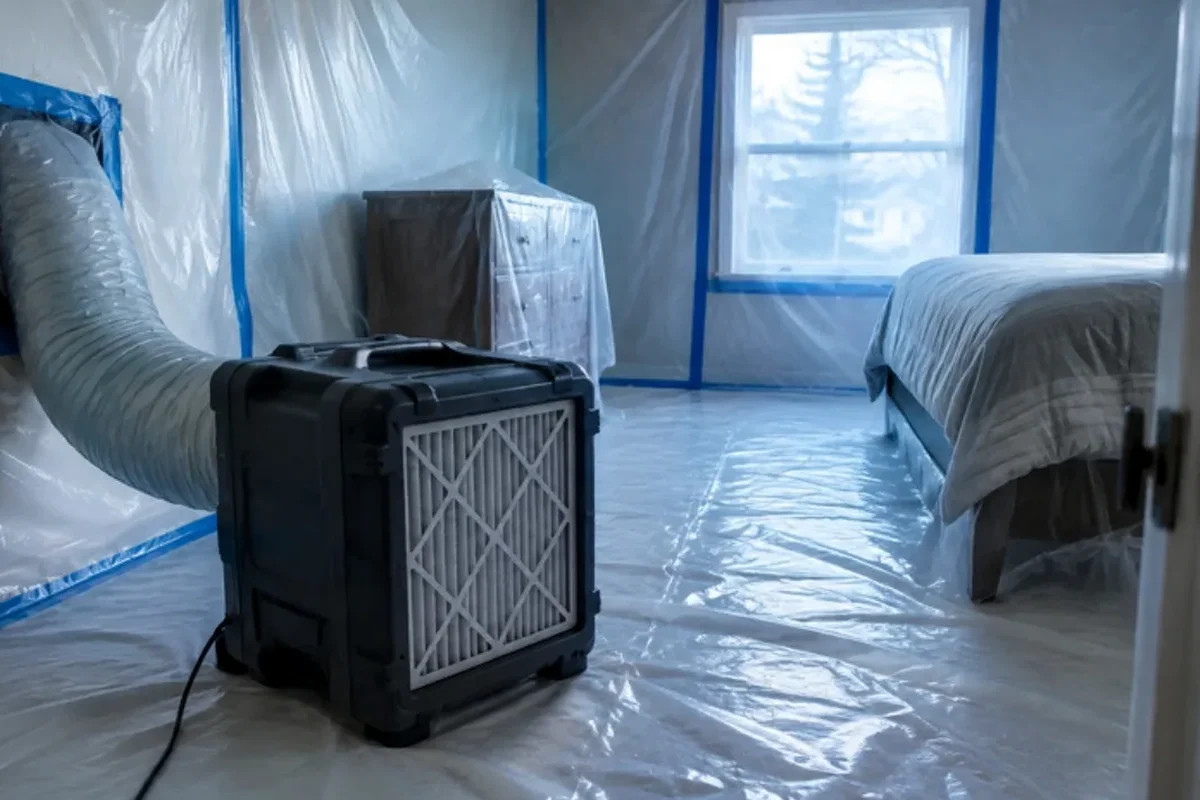
Mold services in Rhome
Services callers ask about
- Mold inspection and moisture mapping
- Air and surface testing
- Removal and remediation
- AC, air handler and duct mold
- Attic mold
- Leak, pipe burst and storm cleanup
- Clearance checks after the work
Each is handled by independent local companies. Pick the closest match when you call and the details get sorted out from there.
Why mold shows up in North Texas
Long hot summers keep air conditioners running for months, and that cooling pulls water out of humid air. Add spring downpours, hail-damaged roofs and the occasional hard freeze that splits a pipe, and moisture finds plenty of ways in. Most cases trace to a leak or a humidity problem, not bad housekeeping.
Properties on larger lots near Rhome often include older outbuildings and long runs of plumbing. Slow leaks and damp ground can cause mold well away from the main living space.
The call, step by step
- Dial the number shown on this page
- Tell the person what you see and where
- Get connected to an independent local mold company
- Hear how that company works and what it charges
Hiring anyone is entirely your decision. The call is an introduction and usually takes only a few minutes.
Where did the water come from?
If a company removes mold without asking about the water behind it, the job is only half finished. You want to hear about repairing the leak, drying the structure and looking at the AC. EPA says to fix the moisture first, since cleaning alone just restarts the regrowth timer. Ask it directly on the first call.
After the work is done
Once a cleanup is finished, ask for a clearance check by an independent assessor before the walls close and the rebuild starts. It covers a visual look, moisture readings and optional sampling. Then keep the AC working, repair leaks quickly and watch humidity, since mold returns wherever moisture does.
Permits and license checks in Rhome
Before signing, look up the company's TDLR mold license; Texas requires one for assessment or remediation projects of 25 contiguous square feet or more.
Once a regulated project passes clearance, Texas law calls for a Certificate of Mold Damage Remediation, a document worth keeping with your home and insurance records.
Remediation itself is cleanup, but putting the room back together can be permitted work; ask the contractor whether Rhome Permitting Department needs to be involved.
Water that came in from outside raises insurance questions; FEMA's flood map search shows whether the property sits in a mapped flood zone.
Calls from Rhome are often matched with companies that also cover Azle, Boyd and Justin.
Common questions in Rhome
What does mold removal involve in Texas?
Should I get mold testing or just an inspection?
What humidity level should I aim for?
What is clearance testing?
Nearby cities and towns
Sources
Last updated: